

Stablecoins have won the argument. What began as an experimental, crypto-native instrument has evolved into genuine payments infrastructure, moving hundreds of billions of fiat currencies quarterly across remittances, B2B settlement, treasury operations, and increasingly, consumer transactions. The value proposition is straightforward: instant, global, fiat-denominated transfers that operate 24/7 without correspondent banking friction. Reflecting this momentum, Citi projects that stablecoin issuance could reach approximately $1.9–$4.0 trillion in five years, underscoring the scale at which stablecoins are being integrated into the global financial system.
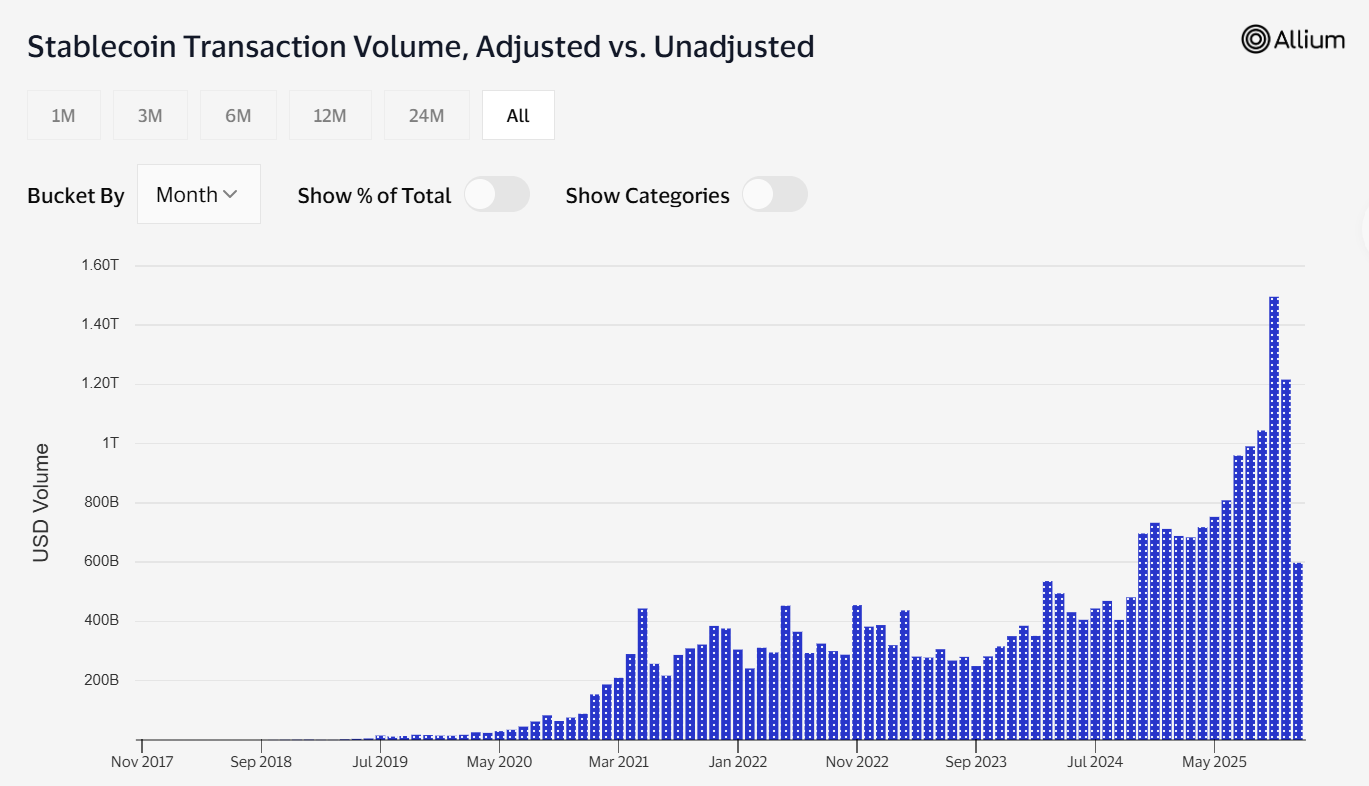
This adoption has revealed an important truth. The companies building successful stablecoin payment products are not competing on which stablecoin they use or which blockchain they’ve chosen. They’re competing on something more fundamental: their ability to combine powerful but raw crypto rails with reliable, compliant, enterprise-grade payment systems.
This distinction matters because it reveals where value and defensibility actually accumulate in the stablecoin stack. Stablecoins solved the asset problem by creating a digital representation of fiat value that holds value and moves freely. However, between that breakthrough and functional payment systems lies what we might call the orchestration problem: the work of making stablecoins behave like infrastructure rather than instruments. In other words, the challenge is how to effectively leverage stablecoins to optimize and complement existing financial rails, rather than attempt to replace them.
We call the companies solving this problem stablecoin orchestration platforms and they are becoming a critical middle layer in global payments. Not the most visible layer, but increasingly the most important one.
The promise of stablecoins is elegantly simple: send value anywhere, instantly, without intermediaries. The reality of implementing stablecoin payments at scale is more complicated.
Consider what a mid-sized fintech faces when integrating stablecoin payments. First, there’s issuer selection (USDC, USDT, or emerging alternatives) and the need to support multiple options as partners and regions prefer different issuers. Then there’s chain selection. Ethereum for liquidity, Solana for speed, Tron for certain international corridors. Each choice carries different custody requirements, security models, and operational trade-offs.
Treasury management becomes immediately complex. Maintaining adequate liquidity across multiple chains and stablecoins requires constant rebalancing. Meeting payment demand may involve bridge risk, timing delays, and operational overhead. What should be an instant payment can quickly turn into a multi-step choreography of liquidity positioning, bridge transactions, and settlement confirmations.
Compliance adds another layer. Transaction monitoring, sanctions screening, reporting, and auditability don’t disappear because payments move on-chain. They become harder to implement because tooling is fragmented and regulatory expectations vary by jurisdiction. Building compliant operations across multiple chains, each with different data structures and transaction patterns, requires dedicated infrastructure.
Finally, there’s the user experience problem. Enterprise treasury teams expect clear reconciliation, real-time visibility, exception handling, and integration with existing financial systems. Raw blockchain transactions provide cryptographic finality, but not the operational clarity finance teams need to manage cash flow, close books, or resolve disputes.
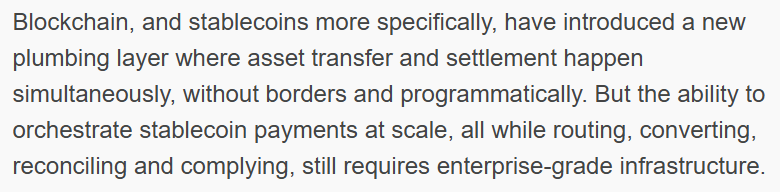
The analogy to early internet infrastructure is instructive. TCP/IP solved the problem of moving packets between networks. But it didn’t immediately enable e-commerce or cloud computing. Those required the presentation and application layers that turned raw networking capability into reliable, scalable services businesses could actually use.
Stablecoins are the TCP/IP packets of programmable money. They’re foundational and powerful, but insufficient on their own. The gap between “technically possible” and “operationally viable” is where orchestration platforms operate.
A stablecoin orchestration platform sits between blockchain infrastructure and real-world payment applications. It is not a wallet, not a blockchain, and not an issuer. It is middleware, a system integration layer that abstracts the complexity of using stablecoins across multiple chains, issuers, and regulatory contexts.
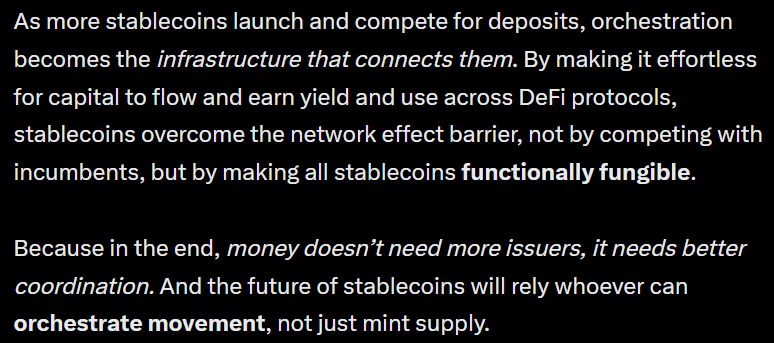
A fast-moving fintech building a remittance product or a marketplace enabling cross-border payouts doesn’t want to interact directly with multiple blockchains. Instead, it integrates once with an orchestration platform that handles routing, liquidity management, compliance workflows, and settlement execution behind a consistent interface.
This abstraction plays the same role payment processors play for card networks or cloud platforms play for computing. The underlying technology remains powerful, but it becomes usable at scale only when wrapped in layers that handle operational complexity, ensure reliability, and provide enterprise-grade controls.
Extending the earlier TCP/IP analogy, orchestration sits above stablecoins in the same way higher networking layers sit above TCP/IP, abstracting a low-level universal settlement protocol into reliable, application-ready interfaces. This enables stablecoins to be embedded into financial software and supports incremental modernization of the financial system without replacing its underlying foundations.
The key insight is that orchestration isn’t about hiding blockchain technology or mimicking traditional finance. It’s about turning stablecoins from instruments that require specialized expertise into infrastructure that can be reliably embedded into payment flows, treasury operations, and financial applications.
Stablecoin orchestration platforms perform several interconnected functions:
Together, these layers transform stablecoins from a powerful but operationally complex technology into infrastructure that meets enterprise standards for reliability, compliance, and control.
Stablecoins’ move into the mainstream exposes the orchestration problem and is following a familiar pattern. Early internet use was simple, limited, and driven by technically literate users. As adoption expanded, requirements became more demanding: reliability, uptime, security, and usability. The solution wasn’t simpler technology, but better abstraction.
The same dynamic is playing out with stablecoins. Crypto-native users tolerated complexity and managed their own operational risk. Enterprise adoption demands guaranteed uptime, clear accountability, regulatory compliance, and integration with existing systems.
Regulatory evolution reinforces this trend. As jurisdictions formalize stablecoin frameworks, compliance requirements become more detailed and more varied. Global payment platforms must navigate different rules across markets, issuers, and chains. Complexity increases with scale.
Market fragmentation adds further pressure. Rather than converging on a single stablecoin or blockchain, the ecosystem is diversifying. Different issuers and chains serve different use cases and regions. This diversity is likely to persist in the intermediate term, which makes orchestration essential.
Different organizations derive value in different ways, but the common benefit is leverage.
In each case, orchestration allows organizations to focus on their core business while relying on specialized infrastructure for stablecoin operations.
Stablecoins themselves are relatively commoditized. While issuers differ in regulatory positioning and distribution, the core product is fungible. Switching costs are low. This standardization is a feature, not a bug: it encourages interoperability and broad adoption.
Blockchains face similar pressure. Multiple chains can support stablecoins effectively, limiting pricing power and long-term defensibility.
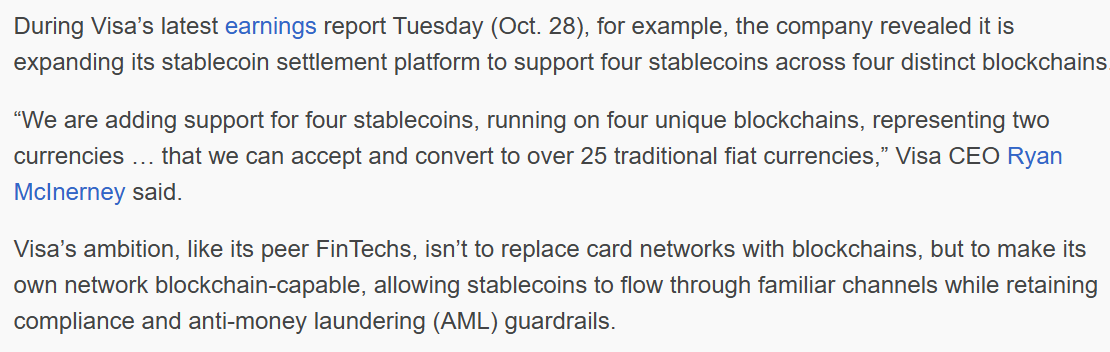
Orchestration platforms play a different role. Rather than concentrating power, they exist to coordinate complexity on behalf of clients. Over time, integrations become deeply embedded within clients’ operational, compliance, treasury, and finance workflows. Regulatory trust is built through consistent execution, transparency, and engagement. Historical transaction data and reconciliation records improve auditability, reporting, and operational insight. As more counterparties and liquidity sources connect through a common coordination layer, efficiency and reliability improve across the network.
The outcome is not lock-in for its own sake, but shared continuity and alignment. Clients benefit from reduced operational friction, improved visibility, and infrastructure that evolves alongside their business, regulatory obligations, and geographic footprint.
This perspective reflects Aquanow’s partnership philosophy: building long-term infrastructure alongside clients, with incentives aligned around operational reliability, regulatory confidence, and sustained growth rather than short-term dependency.
As a result, while stablecoins and blockchains remain essential building blocks, orchestration is where long-term partnership, operational resilience, and sustainable strategic leverage tend to accumulate, creating value that is mutual, durable, and aligned with client success.
The next phase of stablecoin adoption will be marked by invisibility. The winners won’t market blockchain technology. They’ll make it irrelevant to end users while using it effectively behind the scenes. This mirrors the evolution of cloud computing and card payments. Success came not from explaining the technology, but from delivering reliability, scale, and simplicity.
Stablecoin orchestration platforms are on the same path. They will fade into the background while becoming systemically important as the pipes that allow stablecoin payments to flow reliably, compliantly, and efficiently.
Watch for stablecoin capabilities launched by banks and payment providers without fanfare. Watch for regulatory frameworks that assume orchestration layers exist. Watch for enterprise adoption that treats stablecoins as just another payment rail, notable only for speed and cost. If you’ve been paying attention, the movement here is already under way.
Stablecoins solved the asset problem by creating digital money that moves freely across borders. That breakthrough was necessary but insufficient. Between instruments and systems lies the orchestration problem.
The companies solving these frictions are building the infrastructure that will determine whether stablecoins become true global payment rails or remain a powerful but underutilized technology. They won’t be the most visible players, but they will be among the most important ones.
Stablecoins underpin the future of global payments and orchestration platforms are ensuring that future is usable, compliant, and scalable. This is where adoption gets unlocked and where real value accumulates.


